

Healthcare waiting rooms accommodate patients with different ages, mobility levels, and medical needs. Some visitors wait only a few minutes, while others remain seated for longer periods. Seat height, back support, armrests, and surface materials can affect their comfort during this time. Selecting a suitable waiting area bench requires healthcare buyers to consider these physical needs alongside room capacity, cleaning routines, and accessibility requirements.
Furniture decisions should also reflect how a clinic operates. Reception areas may experience frequent movement, while specialist departments may need more space for patients using walking aids. Evaluating these conditions before purchasing helps facility managers choose seating that supports daily use without compromising circulation or maintenance.
Seat Dimensions Affect Everyday Comfort
Seat height influences how easily patients can sit down and stand up. Seats that are too low may increase the effort required from people with limited knee mobility. Excessively high seats can leave shorter users unable to place their feet comfortably on the floor. Buyers should review seat height and test samples with users who represent the facility’s patient population.
Seat depth also deserves attention. Deep seats can prevent shorter patients from reaching the backrest comfortably, while shallow seats may provide insufficient support for some adults. The aim is to allow users to sit back without excessive pressure behind the knees. Facilities serving a broad population should consider whether one seating design meets their needs.
The front edge can influence pressure on the legs during extended waiting. Rounded edges may reduce concentrated pressure compared with sharp edges. Although this detail does not replace proper seat dimensions, it forms part of a practical ergonomic assessment.
Backrests and Armrests Serve Different Needs
Backrests help support the upper body during seated waiting. Their shape and angle influence posture, particularly when appointments are delayed. Buyers should assess whether the backrest provides suitable contact and whether its design matches the expected duration of use. Comfort should be evaluated through physical testing rather than appearance alone.
Armrests provide a contact point when patients sit down or rise from a seat. This feature can be helpful for older visitors and people with limited mobility. However, armrests also affect the usable width of each position. Their height, shape, and spacing should be reviewed alongside the needs of patients who require assistance.
Different departments may need different seating arrangements. General reception areas can accommodate linked seats, while rehabilitation clinics may benefit from more flexible layouts. A waiting area bench should therefore be assessed according to the people using it, rather than selected solely by its seating capacity.
Cleaning Requirements Shape Material Choices
Healthcare furniture needs to withstand regular cleaning and frequent contact. Buyers should examine whether the seat and back surfaces can be cleaned using the facility’s approved products. Manufacturer instructions should clarify suitable cleaning agents and methods, particularly where repeated disinfection is part of routine practice.
Surface design can affect maintenance. Smooth surfaces with fewer difficult-to-reach joints may simplify wiping, while complex gaps can collect dust or residue. Nevertheless, easy cleaning does not automatically establish infection-control performance. The facility’s infection prevention team should assess whether the furniture supports its established hygiene procedures.
Structural finishes also matter in busy clinics. Powder-coated metal components may provide a finished surface for exposed frames and supports. Procurement teams should inspect coating consistency, joints, edges, and areas that could retain moisture. Maintenance staff should also understand how to identify damage and report repairs before minor defects affect continued use.
Accessible Layouts Require More Than Seating Capacity
Room planning determines whether patients can approach and leave their seats comfortably. Clear routes should connect entrances, reception counters, consultation rooms, and accessible facilities. Furniture should not obstruct these paths or interfere with staff movement during busy periods.
Spacing between seats affects both privacy and circulation. Closely arranged seating can increase capacity but may make it harder for patients to enter or leave a row. Wider spacing can improve movement while reducing the number of available places. Measuring the room and reviewing expected visitor flow helps planners balance these requirements.
Wheelchair users and people with walking aids may need clear floor space beside the seating arrangement. Facilities should also consider turning space and routes to accessible service points. Applicable accessibility regulations must guide the final layout. A waiting area bench should never be positioned in a way that compromises required access or emergency circulation.
Procurement Teams Need Verifiable Specifications
Before approving an order, buyers should confirm seat dimensions, structural details, maintenance instructions, and available technical documentation. Load ratings and durability claims should be supported by manufacturer records. These checks are especially important for public healthcare projects, where procurement specifications may require documented evidence.
Expected use should also influence the evaluation. A small clinic may prioritize flexible placement, while a high-traffic outpatient department may focus on maintenance access and replacement arrangements. Staff can inspect samples for stability, visible finishing defects, accessible cleaning surfaces, and ease of movement around the furniture.
Project logistics deserve attention before delivery. Buyers should confirm quantities, installation access, delivery schedules, and warranty conditions. Multi-site projects may also benefit from consistent specifications across different locations. Clear agreements help purchasing teams coordinate installation and after-sales support without relying on assumptions about the supplied furniture.
Flexible Seating Can Support Different Clinic Plans
Some healthcare spaces need furniture that can be rearranged as visitor numbers or room functions change. Individual chairs allow separate placement, while grouped seating can organize a reception area into defined rows. The preferred arrangement depends on available floor space, circulation requirements, and the facility’s approach to patient access.
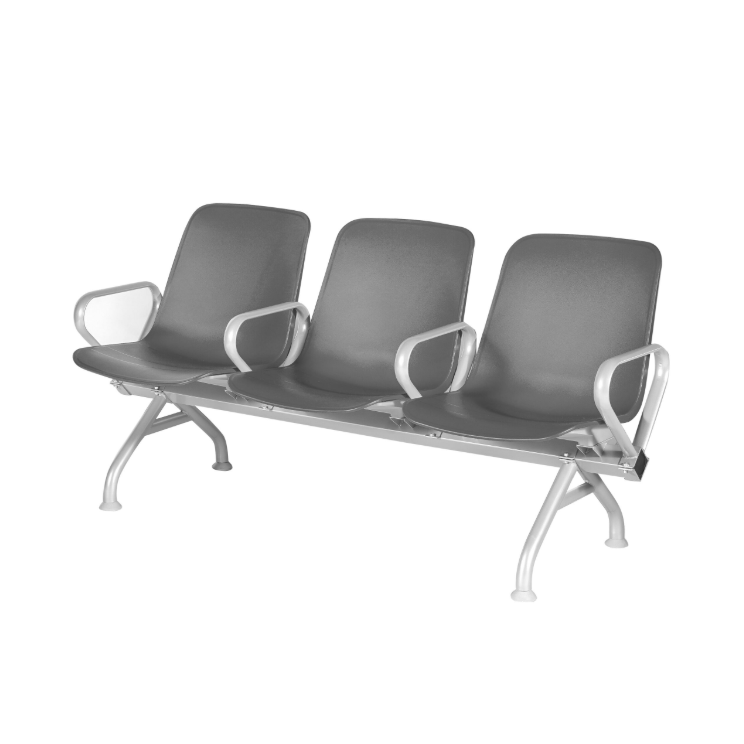
For projects considering these factors, Leadcom seating offers the DARLIE LS-551 as one configurable seating option. Its seat and back use integral moulded PP padding, while the armrests, legs, beam, and brackets use powder-coated steel. The Darlie waiting chairs can be arranged individually or grouped together, giving planners flexibility when considering different room layouts.
These product details provide a starting point for procurement discussions, but they do not establish every requirement for healthcare use. Buyers should separately confirm dimensions, available configurations, load ratings, and cleaning compatibility. Any required clinical certifications or infection-control claims should also be verified through appropriate documentation rather than inferred from the materials.
Patient Needs Should Guide the Final Choice
Ergonomic seating depends on the relationship between physical comfort, accessibility, cleaning, and room layout. Suitable seat dimensions and back support help address posture, while armrests can assist movement. Appropriate spacing and cleanable surfaces support everyday clinic operations.
Healthcare buyers can begin by identifying the difficulties patients experience in existing waiting areas. Comparing furniture samples against these observations provides a practical basis for selection. With its stated material construction and flexible arrangement options, Leadcom seating provides a model for consideration. The final decision should rest on verified specifications and the facility’s actual requirements, rather than appearance or capacity alone.